BETA
MEET YOUR NEXT IDE
An IDE for the half of the job that's still yours: deciding what the software does.
Editor, version control, debugger, profiler. For the layer above the code.
BETA
MEET YOUR NEXT IDE
An IDE for the half of the job that's still yours: deciding what the software does.
Editor, version control, debugger, profiler. For the layer above the code.

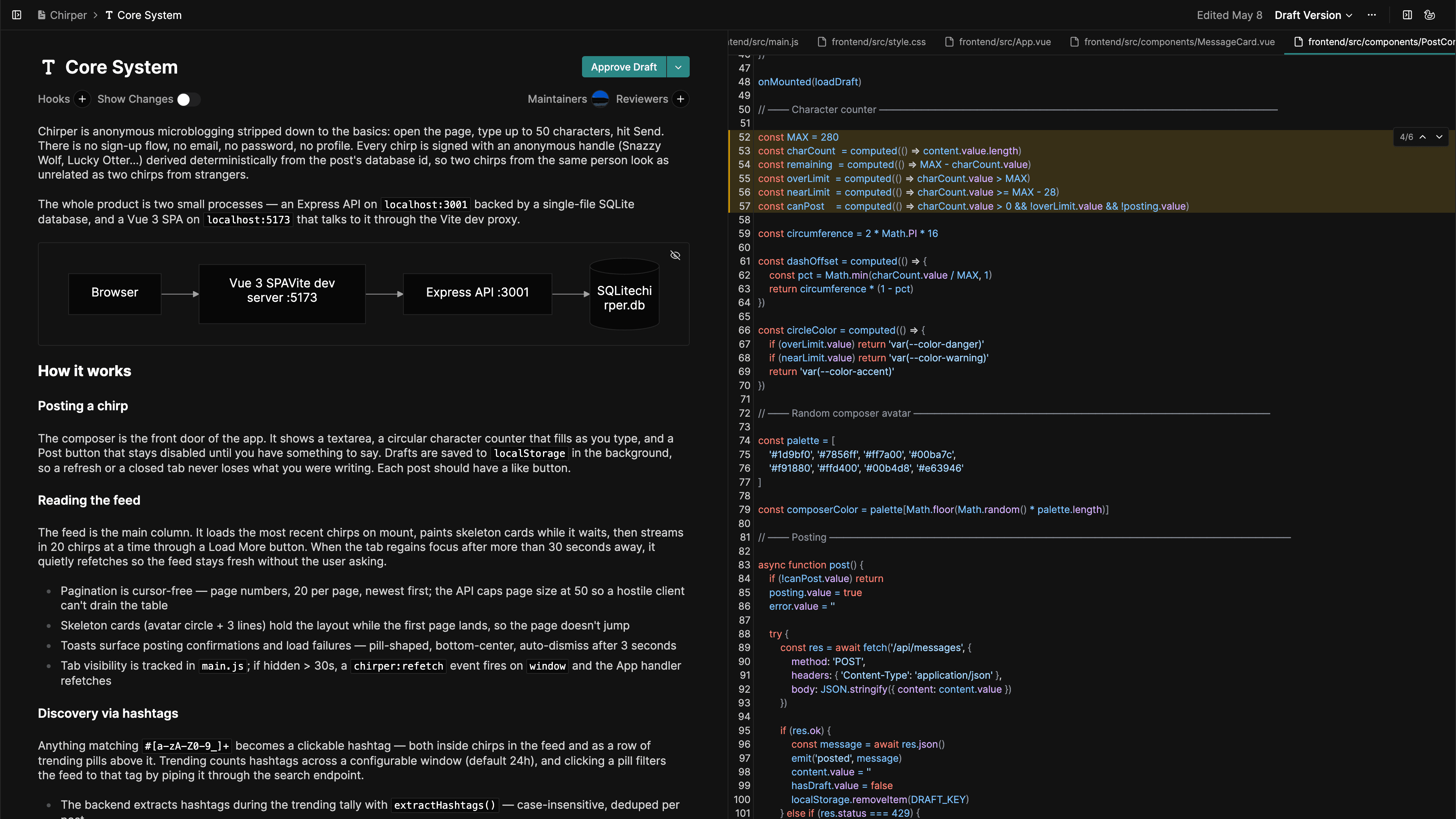
Persistent Context
Code with an explainable origin
Each block produces code. Each piece of code points back at the block. The link survives every regeneration, so the trail between words and code is always there.
Persistent Context
Code with an explainable origin
Each block produces code. Each piece of code points back at the block. The link survives every regeneration, so the trail between words and code is always there.
Persistent Context
Code with an explainable origin
Each block produces code. Each piece of code points back at the block. The link survives every regeneration, so the trail between words and code is always there.
Collaborative Work
Review changes in plain text and in code
Reviewing AI-generated code means reading a thousand lines. Reviewing what produced it means reading four sentences. Same disagreement, much smaller diff.
Collaborative Work
Review changes in plain text and in code
Reviewing AI-generated code means reading a thousand lines. Reviewing what produced it means reading four sentences. Same disagreement, much smaller diff.
Collaborative Work
Review changes in plain text and in code
Reviewing AI-generated code means reading a thousand lines. Reviewing what produced it means reading four sentences. Same disagreement, much smaller diff.
Code health & runtime metrics
Debug from the page that produced the code
The graph of how the code is performing sits inside the writing that produced it. When something breaks in production, you can fix it on the page where it was written.
Code health & runtime metrics
Debug from the page that produced the code
The graph of how the code is performing sits inside the writing that produced it. When something breaks in production, you can fix it on the page where it was written.
Code health & runtime metrics
Debug from the page that produced the code
The graph of how the code is performing sits inside the writing that produced it. When something breaks in production, you can fix it on the page where it was written.
Benefits
Everything an IDE does, for the layer above the code.
Any AI, one workspace.
Claude Code, Cursor, v0, Ollama, all driven from the same blocks.
Any AI, one workspace.
Claude Code, Cursor, v0, Ollama, all driven from the same blocks.
Drift you can see.
When code and intent move apart, the editor flags it before it ships.
Drift you can see.
When code and intent move apart, the editor flags it before it ships.
Token-aware writing.
Lint-style feedback that says the same thing in fewer tokens.
Token-aware writing.
Lint-style feedback that says the same thing in fewer tokens.
Tests from the block.
Acceptance criteria compile into runnable tests against the linked code.
Tests from the block.
Acceptance criteria compile into runnable tests against the linked code.
Refactor the meaning.
Rename a concept once, propagate through every linked block and file.
Refactor the meaning.
Rename a concept once, propagate through every linked block and file.
Two-way Code Lens.
Fom a block to the code it produced, and back to the block that authored it.
Two-way Code Lens.
Fom a block to the code it produced, and back to the block that authored it.
How it works
The IDE for what you tell the AI
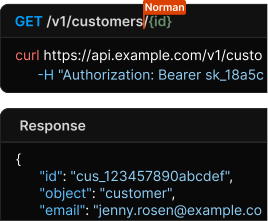
Step 1
Write it once
Structured blocks the AI can act on and humans can read.
Step 1
Write it once
Structured blocks the AI can act on and humans can read.
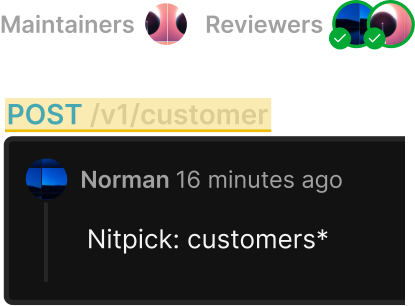
Step 2
Review the change
Review the change, see the code it'll produce, agree, merge.
Step 2
Review the change
Review the change, see the code it'll produce, agree, merge.
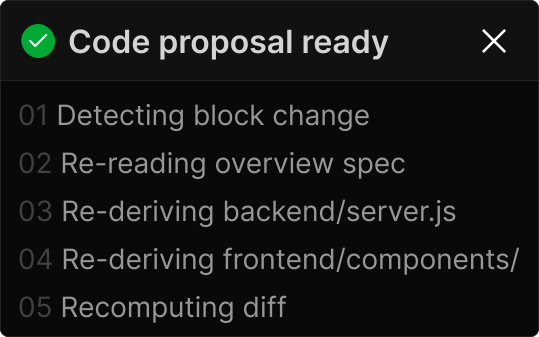
Step 3
Generate the Code
Generated from instructions that both AI and Humans can read.
Step 3
Generate the Code
Generated from instructions that both AI and Humans can read.
FAQs
Got questions?
We’ve got answers.
Still have questions?
Contact us and we’ll help you out.
01
What is Oxynote, exactly?
An IDE you write in instead of code in. You write what your software does in structured English, the AI tool you already use generates the code, and Oxynote keeps the two linked as both change.
02
Do I have to leave my current AI tool to use this?
No. Oxynote sits next to Cursor, Claude Code, Codex, Copilot, v0, Ollama, and the rest. Whichever tool you use today reads from Oxynote and writes the code wherever it normally writes the code.
03
Does this work with code I already have?
Yes. Oxynote doesn't care how the existing code got there. It just starts working with what's there.
04
What about the people on my team who don't write code?
PMs, designers, and QA write blocks too. The AI generates code from whatever the team agreed on, regardless of who wrote which block.
05
Is this going to slow me down?
No. Oxynote shortens the loop in three places at once: shipping code with AI, trying out a different approach, and getting the team aligned on what to build. All of them used to take longer than they should.
06
How do I get access? Is it free?
Oxynote is in closed beta. Request access on this page and we'll get back to you in batches as capacity opens up. Early access is free.
01
What is Oxynote, exactly?
An IDE you write in instead of code in. You write what your software does in structured English, the AI tool you already use generates the code, and Oxynote keeps the two linked as both change.
02
Do I have to leave my current AI tool to use this?
No. Oxynote sits next to Cursor, Claude Code, Codex, Copilot, v0, Ollama, and the rest. Whichever tool you use today reads from Oxynote and writes the code wherever it normally writes the code.
03
Does this work with code I already have?
Yes. Oxynote doesn't care how the existing code got there. It just starts working with what's there.
04
What about the people on my team who don't write code?
PMs, designers, and QA write blocks too. The AI generates code from whatever the team agreed on, regardless of who wrote which block.
05
Is this going to slow me down?
No. Oxynote shortens the loop in three places at once: shipping code with AI, trying out a different approach, and getting the team aligned on what to build. All of them used to take longer than they should.
06
How do I get access? Is it free?
Oxynote is in closed beta. Request access on this page and we'll get back to you in batches as capacity opens up. Early access is free.
Code software with confidence
See validation, checks, and execution in one continuous workflow.
Code software with confidence
See validation, checks, and execution in one continuous workflow.