
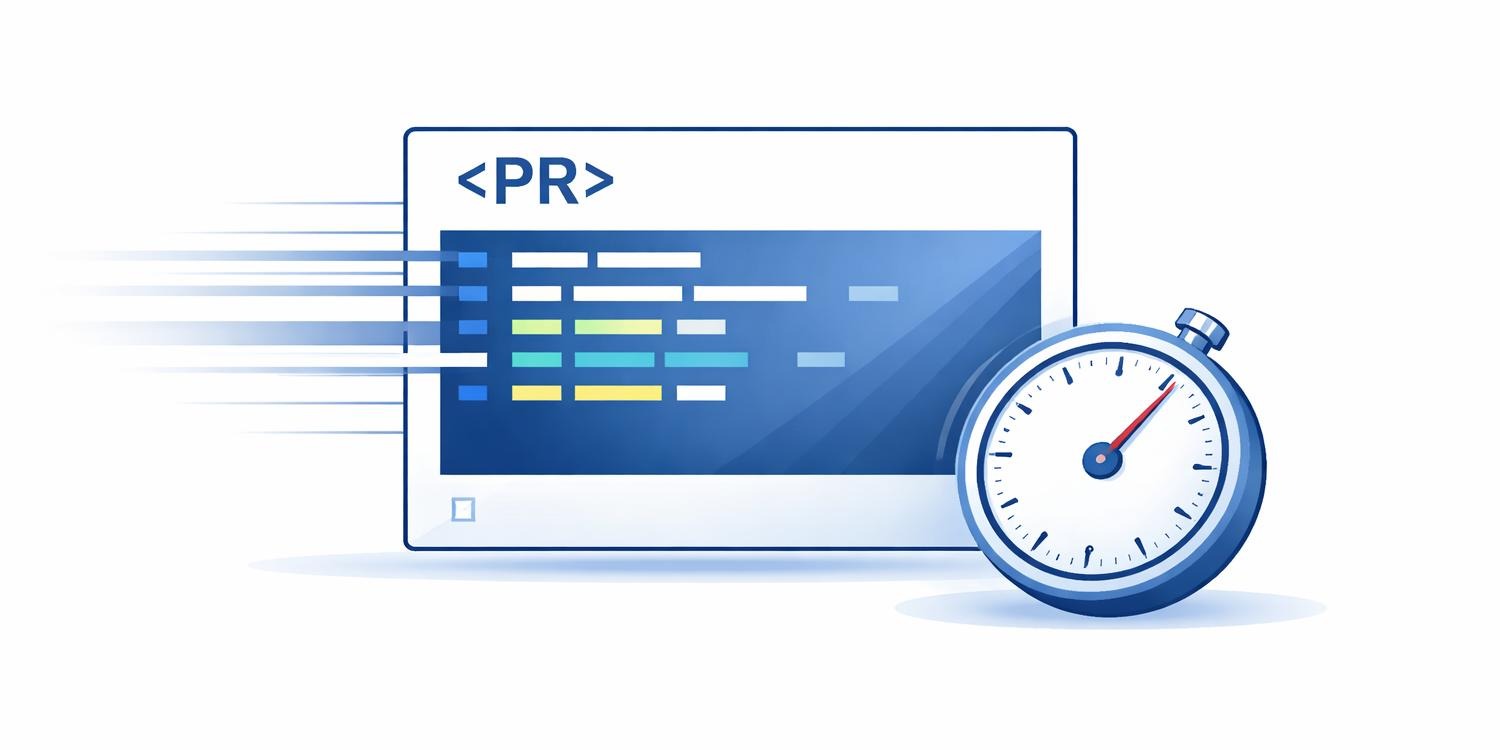
"First Responder" Approach to Reviewing

Recent engineering breakthroughs have made it faster to write software and ship features, but that has also made reviews more important than ever. In many cases, the real bottlenecks in product delivery are no longer technical. They are human. AI has made this even more potent: coding is getting cheaper, while validation, review, and merging are becoming the real constraints.
How often does a tiny PR sit unmerged for days? Usually, the issue is not the size of the change. It is the team’s mindset around reviews and the tendency for everyone to prioritize their own work first.
Studies on engineering productivity show that developers spend only about 20–40% of their time writing code, with the rest going to communication, review, and coordination — making review latency a critical factor in delivery speed.
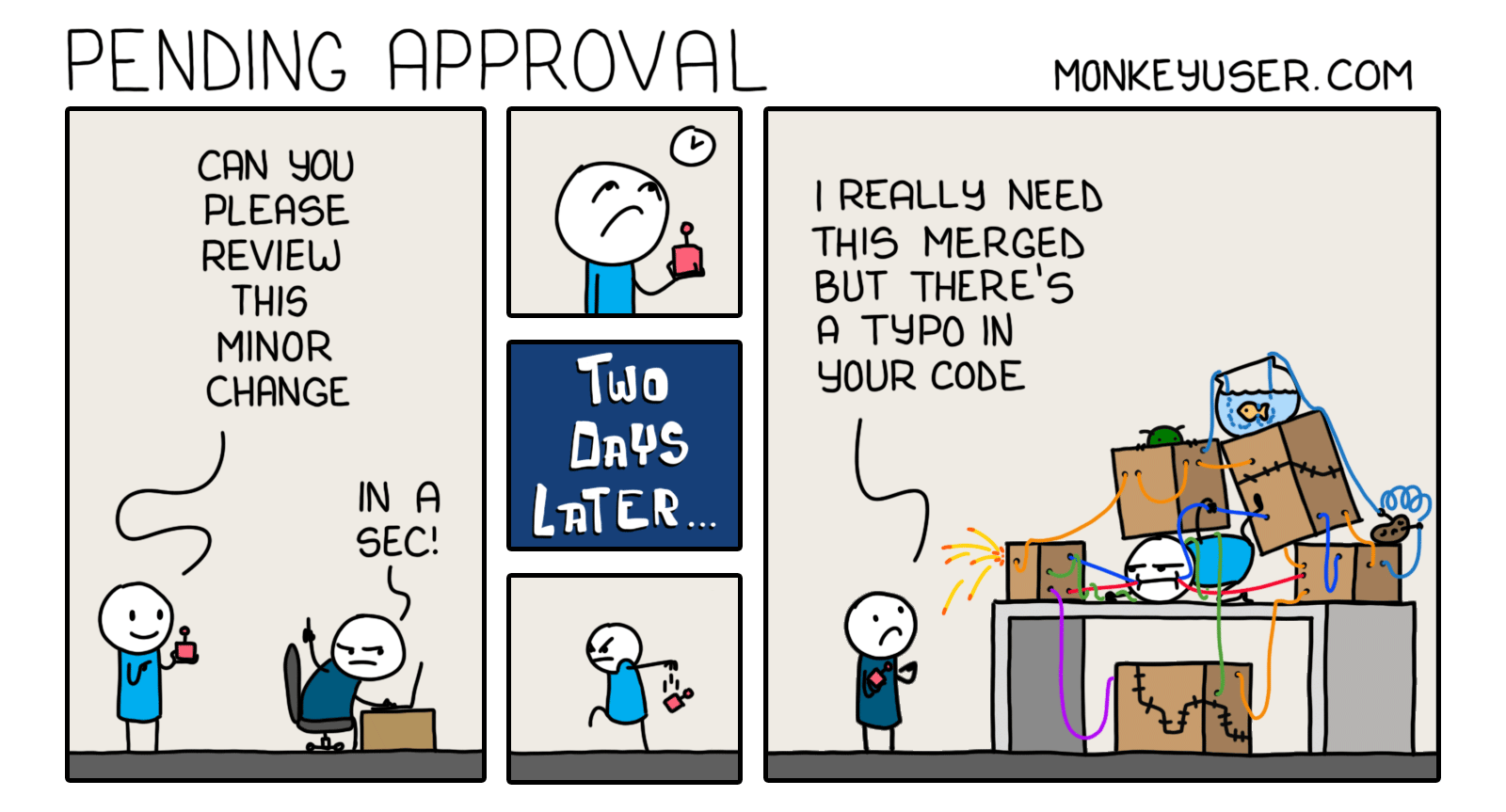
I ran into this often when I was a team lead. I have been a backend engineer for seven years, including four years leading a team of eight, helping establish other teams, and mentoring other team leads. Many people saw reviewing as something they would get to after finishing their own tasks; they didn’t think reviews were part of the work, and were ashamed to admit they spent a lot of time reviewing. It’s something I had to constantly remind people of: reviews are actually even more important than coding itself. A day spent helping unblock teammates through review is just as productive as a day spent coding your own feature.
The second problem was the approach. I have seen people rely on “morning reviews” or “end-of-day reviews” as a habit, but in practice, those routines are often too slow. They create avoidable waiting time and turn collaboration into a queue. Reviews work best when they are treated as part of the team’s shared delivery flow, not as an optional task to get to later.
One approach I follow to keep reviews fast and unblock others is simple: look at the PR as soon as it is opened. I call it the “First Responder” approach. Not every review needs to become a deep, scheduled task. Often, the first few minutes are enough to understand what kind of change you are dealing with and what level of attention it will need. Speed matters most at the start, when early feedback can still change the direction cheaply.
Sometimes the PR is small. It might be a deployment configuration tweak, a minor bug fix, or a documentation update. In those cases, you can often review and approve it within minutes. That kind of responsiveness matters more than people think. Small changes should not sit around waiting for a “review block” later in the day.
When the PR is larger, I still try to open it immediately and do a fast skim. The goal is not to complete the full review on the spot, but to build a quick mental map of what is changing. Once you understand the shape of the work, it becomes much easier to return to it later with context already loaded. You may even find yourself thinking through the design while working on something else.
That first pass is also a good time to leave an early comment if something stands out. Maybe the task was misunderstood, the structure is heading in the wrong direction, or an important piece is missing. You do not need to wait for a perfect, comprehensive review to say that. A quick comment early can save your teammate hours of effort and prevent the PR from drifting further in the wrong direction. Early feedback is often more valuable than thorough feedback that arrives too late.
Lastly, if you have to postpone the review, the key is to return to the PR as soon as possible. Large reviews do not always need to be finished in one sitting. You can review them in parts, leave comments, and return to your own work in between. That is still progress. More importantly, it keeps the author moving instead of leaving them blocked for half a day or more.
Code reviews not only improve software quality but also play a crucial role in knowledge transfer and team-wide understanding, reducing reliance on single individuals. They also foster continuous learning, improve collaboration and communication, and promote collective ownership of the features. Research shows that modern code reviews catch around 60–65% of defects before testing even begins, making them one of the most effective quality practices in software engineering. Additionally, studies indicate that around 75% of review feedback is not about bugs at all, but about maintainability, readability, and long-term design, highlighting their role in improving system evolution.
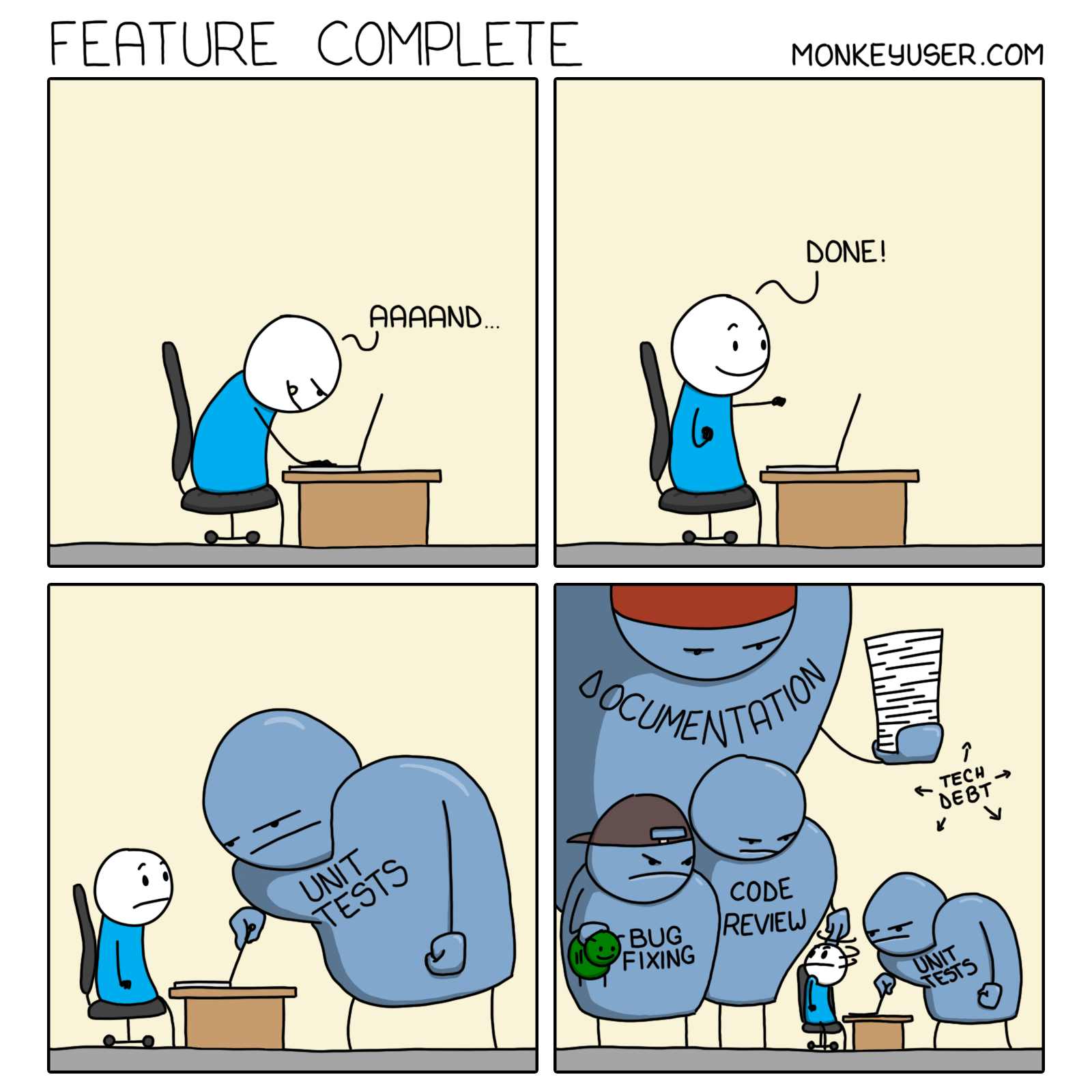
A fast review culture comes down to a few habits:
- Look at PRs early.
- Do not let small changes sit.
- Skim big changes before reviewing deeply.
- Give early feedback when the direction is off.
- Review incrementally instead of waiting for a perfect block of time.
- Optimize for unblocking teammates.
Code review is no longer just a quality safeguard. It is a core part of how teams deliver software. As writing code becomes faster, the real advantage comes from how quickly a team can validate, align, and move changes forward together. The teams that ship well are not necessarily the ones who code the fastest, but the ones who unblock each other the fastest. Treating reviews as real work, acting on them early, and optimizing for flow rather than personal task completion turns reviews from a bottleneck into a force multiplier.
Sources:
- De Silva, D. I., et al. The Effectiveness of Code Reviews on Improving Software Quality
- Bacchelli, A., & Bird, C. Expectations, Outcomes, and Challenges of Modern Code Review
- Charoenwet, W., et al. Toward Effective Secure Code Reviews
- SmartBear. Best Practices for Peer Code Review
- Cohen, M. (2006). Best Kept Secrets of Peer Code Review
- MonkeyUser — Great Quality Comics
Crafted with care in Lithuania & France
Closed beta. Request access above.