
Notion vs Oxynote: General Workspace vs Engineering Knowledge Base

Most teams do not think deeply about documentation until it starts failing them.
At first, a flexible tool like Notion feels like the perfect answer. It is easy to set up, share, and adapt. A team can create a wiki, planning hub, meeting note archive, and project tracker without introducing a dozen separate tools. That flexibility feels powerful until engineering documentation begins to drift.
Then, deployment runbooks become outdated. Architecture decisions get buried. Technical docs lose credibility because nobody is quite sure whether they still reflect reality. The issue is not a lack of documentation. It is a lack of structure and accountability. That is the gap Oxynote is designed to fill.
Two tools, two different philosophies
While Notion and Oxynote may look similar on the surface, they solve fundamentally different problems. Notion is a general workspace for organizing work and knowledge across the company. Oxynote is an engineering knowledge base built to keep technical documentation accurate, reviewable, and tied to real systems. Notion is broad by design. Oxynote is narrow on purpose.
Notion is at its best when information needs to move across teams. Product can write specs, marketing can plan campaigns, leadership can share strategy, and engineering can document internal work, all in one place. Its strength is not precision, but reach. It creates a shared operating layer for the company.
Oxynote starts from a different assumption: in engineering, documentation is not just reference material. It is part of how systems are built, operated, and recovered under pressure. A vague wiki page is inconvenient. A vague runbook during an incident is a liability. That difference raises the bar. Documentation needs to be structured, reviewable, and dependable.
Documentation that reflects reality (not just intent)
One of the biggest gaps in traditional documentation is that it drifts away from the system it describes. Even well-written runbooks and architecture docs become outdated the moment systems evolve.
Oxynote approaches this differently by bringing observability directly into the documentation layer.
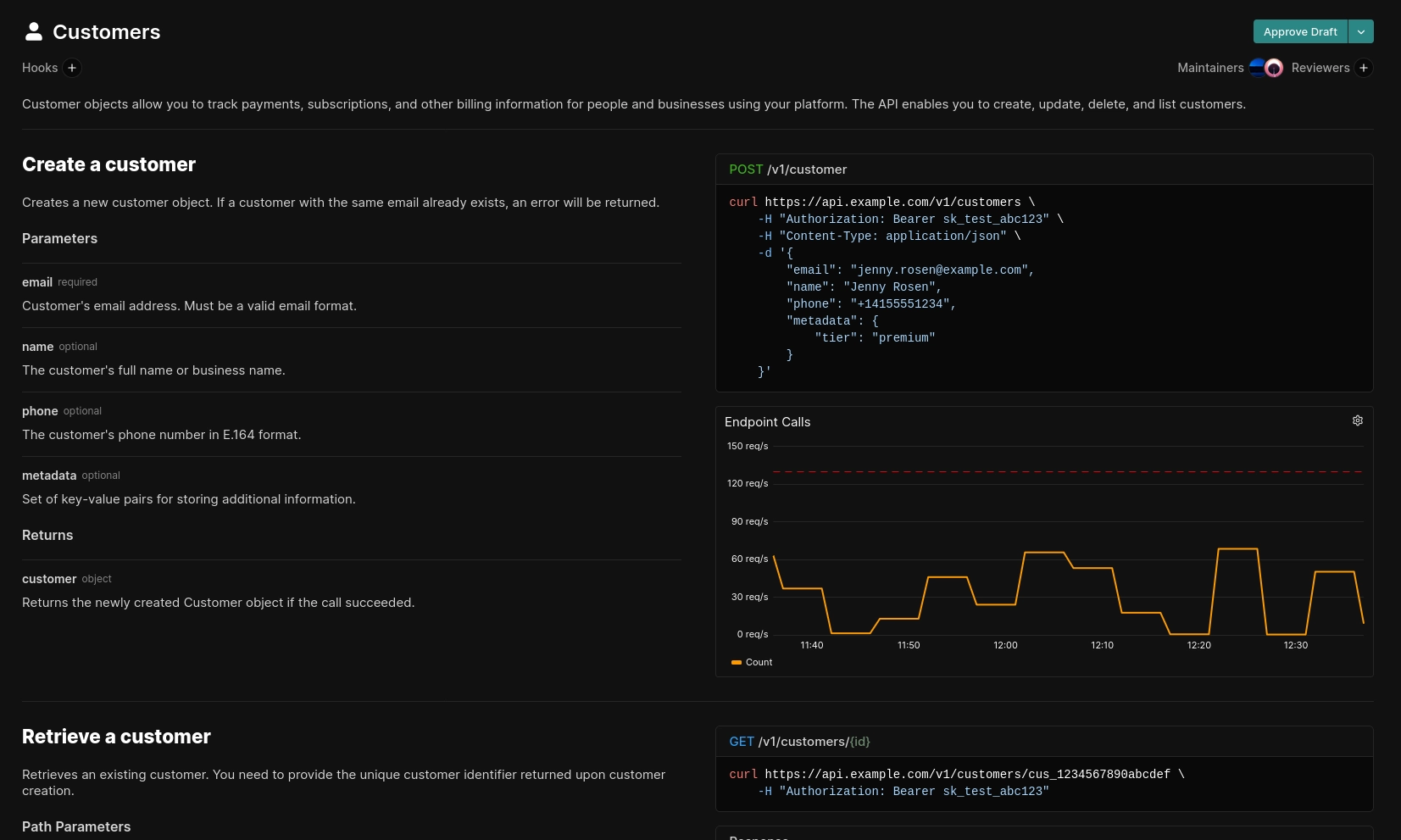
Instead of describing a system in isolation, teams can embed live system metrics directly inside their docs. Dashboards, service health indicators, and performance signals are not separate tools you have to open during an incident. They are part of the documentation itself.
A runbook is no longer just a set of instructions. It becomes a live interface to the system it supports. Engineers can see current behavior, validate assumptions, and respond faster without switching context. The gap between “what the doc says” and “what the system is doing” becomes much smaller.
It also raises the standard for accuracy. When documentation is connected to real data, inconsistencies are easier to spot. Outdated assumptions become visible. The system itself helps keep the documentation honest.
This is where general-purpose tools often break down for technical teams. Notion makes it easy to create and organize content, but it does not enforce consistency. Pages can be structured in different ways, updated casually, and owned by no one in particular. That openness lowers the barrier to contributing, but over time it can lead to fragmented, difficult-to-trust documentation.
Oxynote takes a more opinionated approach. It treats engineering knowledge as an operational asset, not just internal content. Instead of asking teams to invent their own system, it provides a framework designed for technical accuracy, ownership, and long-term reliability. That tradeoff is intentional. It gives up some flexibility in exchange for clarity and trust.
The difference is not about company size or stage. It is about how seriously a team treats its engineering knowledge from the beginning. Flexible tools are often adopted early because they are easy to use. But that same flexibility allows weak documentation habits to form: unclear structure, missing context, and information that quietly becomes outdated. Oxynote assumes that documentation should be treated as a system from day one. Introducing structure and review workflows early helps teams avoid the slow decay that leads to the need to rebuild their documentation later.
For many companies, the right answer is not to force one tool to do both jobs. Notion works well as a company-wide workspace, but engineering documentation demands a higher standard. That is exactly what Oxynote is built for.
Oxynote gives engineering teams a structured, reviewable documentation system that is connected to the real operational context. Runbooks, architecture decisions, and system-level knowledge are too important to live in a tool optimized for flexibility first. Notion can organize work across the company. Oxynote is where engineering documentation should live when accuracy and trust matter.
Notion vs. Oxynote at a glance
Notion
- Pros
- Flexible enough to support many teams and workflows
- Easy to adopt early without much setup
- Useful as a shared company-wide workspace
- Works well for planning, notes, specs, and cross-functional collaboration
- Cons
- Does not naturally enforce consistency in technical documentation
- Ownership can become unclear over time
- Important engineering knowledge can get buried or drift out of date
- Trust in docs can erode when accuracy is not actively maintained
Oxynote
- Pros
- Built specifically for engineering documentation
- Encourages structure, review, and clear ownership
- Better suited for runbooks, architecture docs, and operational knowledge
- Designed to keep documentation dependable under pressure
- Embeds live system metrics directly into documentation, reducing the gap between docs and reality
- Cons
- Less flexible as a general-purpose workspace
- Narrower use case than a tool like Notion
- Requires cultural buy-in to maintain high-quality documentation
- Smaller ecosystem compared to more established tools
So the real question is not which tool has more features. It is whether you need a workspace for everything, or a system you can rely on when accuracy matters. Notion is where a company organizes work. Oxynote is where engineering knowledge is expected to hold up under pressure. That difference may seem subtle at first, but in practice, it determines whether your documentation is something you write or something you can rely on.
FAQ
Is Oxynote a good alternative to Notion for engineering documentation?
Yes, Oxynote is a strong Notion alternative for engineering documentation because it is built specifically for technical docs, runbooks, and architecture knowledge that need structure, ownership, and long-term accuracy.
What is the best tool for engineering documentation?
The best engineering documentation tool depends on your team’s needs, but teams that need reliable runbooks, architecture docs, and operational knowledge often choose a purpose-built platform like Oxynote over a general workspace like Notion.
Why is Notion not always ideal for technical documentation?
Notion is flexible and easy to use, but that flexibility can make technical documentation harder to standardize, review, and trust over time, especially as engineering teams grow.
What should an engineering documentation tool include?
A strong engineering documentation tool should support structured technical docs, clear ownership, review workflows, and easy access to operational context such as system health, architecture decisions, and runbooks.
How can teams prevent documentation from going out of date?
Teams can reduce documentation drift by using a documentation system with clear ownership, review processes, and tighter connections between docs and real system behavior.
Can you use Notion and Oxynote together?
Yes, many teams use Notion for company-wide collaboration and Oxynote for engineering documentation, giving them both a flexible workspace and a reliable system for technical knowledge.
Crafted with care in Lithuania & France
Closed beta. Request access above.